What are eBooks and Why Are Schools Using Them?
By ePlatform Collection Management
| Jul 09, 2026
Categories : Learn about eBooks
Estimated reading time: 8 minutes | Last updated: July 2026
eBooks are digital books that students can read on a device, but in schools, they are more than simply a screen version of a printed book.
For many students, eBooks make reading more flexible and accessible. They can help students read at school or at home, adjust the reading experience to suit their needs, and access books even when a printed copy is not available.
In this guide, we’ll look at what eBooks are, how they work in schools, who benefits most, and what schools should look for when providing eBook access to students.
Key Takeaways
- eBooks are digital versions of books that students can read through a device, browser, app or school digital library platform.
- Schools use eBooks to improve access to reading, especially when students need books outside the physical library or classroom.
- eBooks can support independent reading, class texts, home reading, accessibility, student choice and school-wide reading engagement.
- eBooks are not the same as PDFs. Many eBooks use flexible formats that can adjust to screen size, font size and reading preferences.
- School eBook platforms make it easier to manage digital lending, provide student access, curate collections and understand reading activity through usage insights.
Table of Contents
- What is an eBook?
- How Do eBooks Work in Schools?
- eBooks vs PDFs
- Why Are Schools Using eBooks?
- Which Students Benefit from Using eBooks?
- Do eBooks Count as Reading?
- What Should Schools Look for in an eBook Platform?
- FAQs
What is an eBook?
An eBook is a digital version of a book that students can read on a device such as a laptop, tablet, phone or eReader. eBooks can usually be accessed through a browser, app or digital library platform.
At their simplest, eBooks give students another way to read. Instead of borrowing a printed copy from the school library, students can open a digital version and read it on screen.
In schools, eBooks are often used alongside printed books and Audiobooks. They are not designed to replace every printed book, but they can help schools make reading more accessible, flexible and available to students wherever they are learning.
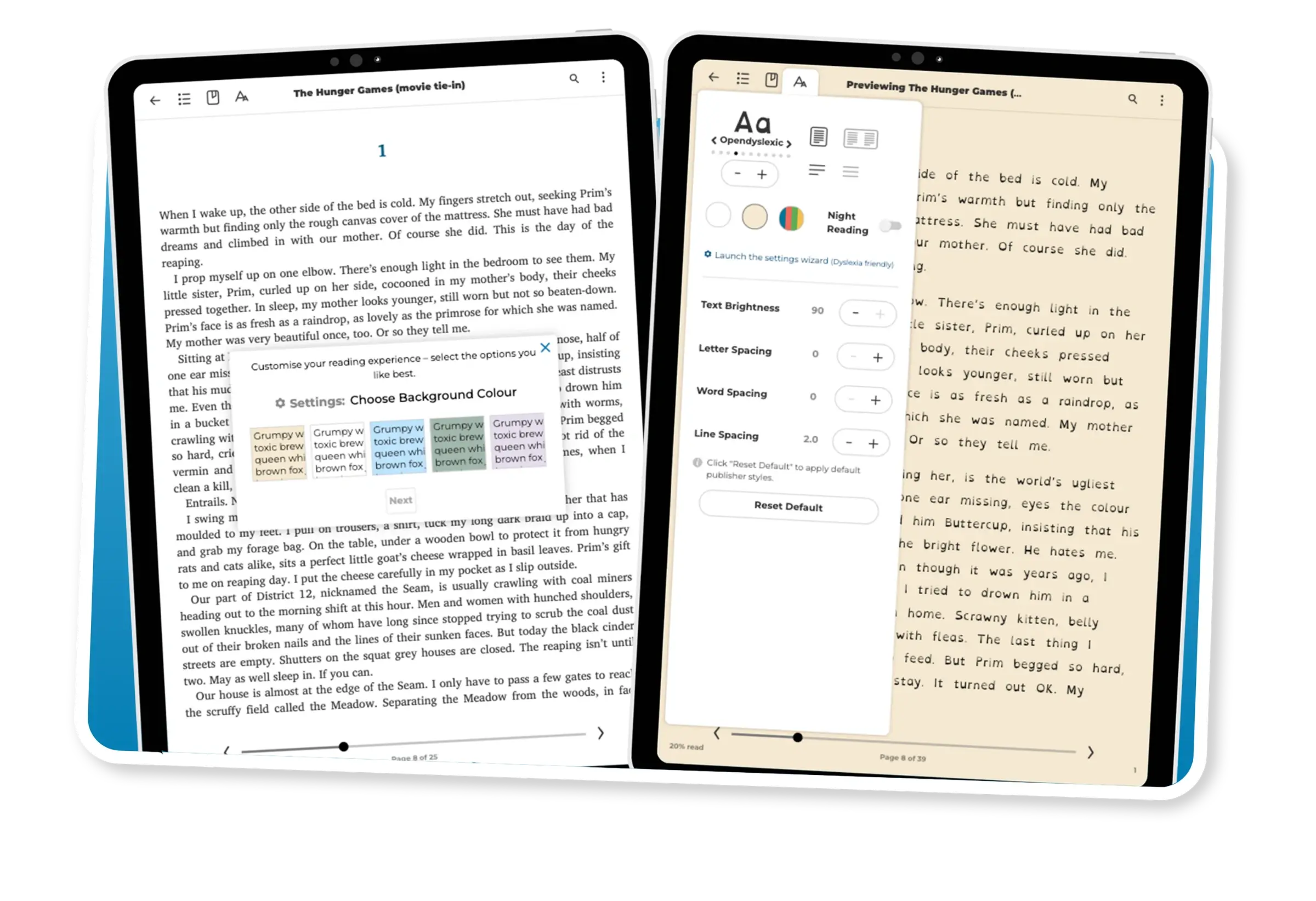
Depending on the platform, eBooks may also include tools that help students adjust the reading experience. This can include changing font size, line spacing, background colour, using bookmarks, adding notes, highlighting passages or using read-aloud support where available.
How Do eBooks Work in Schools?
For students, using an eBook is usually simple. They log in to a school-approved platform, search or browse for a title, borrow or open the book, and start reading on their device.
There are three key elements that make eBooks useful in a school setting:
- Access: Students can read books through a school digital library, often from school, home or anywhere they have internet access.
- Flexibility: Students can adjust how they read, including font size, spacing, background colour and other reading settings where available.
- Choice: eBooks allow students to browse and borrow from a wider digital collection, including fiction, non-fiction, class texts and interest-based reading.
For schools, eBooks work best when they are easy to find, simple to borrow and connected to the wider reading culture of the school. They can support independent reading, class reading, reading at home, holiday reading, intervention, wellbeing collections and reading for enjoyment.
Digital reading for schools
Curious what eBooks & Audiobooks could look like at your school?
Book a short demonstration to see the student experience, explore available eBooks and Audiobooks, and understand how ePlatform supports reading across your school.
- See how students browse, borrow, read and listen
- Explore tools that support different reading needs
- Learn how usage insights help librarians and school leaders
eBooks vs PDFs
eBooks and PDFs are both digital formats, but they are not the same reading experience.
An eBook is a digital book designed to be read on a device. Many eBooks use formats such as EPUB, which can adapt to different screen sizes and allow students to adjust parts of the reading experience.
A PDF is a fixed-layout document. It keeps the same page design, which can be useful for worksheets, illustrated pages or documents where layout matters. However, PDFs can be less flexible on smaller screens because the text and page layout do not always reflow.
In simple terms, eBooks are often stronger for flexible reading, especially when students want to adjust text size, spacing or screen display.
Both can be useful in schools, but they serve different purposes. A school eBook collection should ideally make it easy for students to read books in a format that works well across devices and supports different reading needs.
Why Are Schools Using eBooks?
Schools use eBooks because they give students more ways to access books. For some students, eBooks make reading more convenient. For others, they make reading more accessible, especially when printed books are difficult to access, carry, adjust or read for long periods.
eBooks do not replace printed books. They are about giving students another route into reading, especially when schools want to extend access beyond the physical library and make books available across different learning settings.
To Improve Access to Books
Printed books are valuable, but access can be limited by opening hours, location, stock levels and the number of copies available. eBooks can help schools extend access by allowing students to borrow and read digitally.
This can be especially useful for students who want to read at home, students who forget to borrow a physical book, or schools that want to make reading available beyond the library shelves.
To Support Student Choice
Choice is an important part of reading engagement. eBooks allow students to browse a digital collection, search by title, author or topic, and borrow books that match their interests.
For some students, the privacy of digital browsing can also help. They can explore books at their own pace, try new genres, or choose titles without feeling watched or judged.
To Improve Accessibility
eBooks can support students who benefit from a more flexible reading experience. Depending on the platform, students may be able to adjust font size, line spacing, background colour or other display settings.
These tools can help students who experience visual fatigue, tracking difficulties, dyslexia, attention challenges or other reading needs. eBooks can also support students who need read-aloud tools, translation support or other accessibility features where available.
To Support Reading Beyond the Classroom
eBooks help schools extend reading beyond the classroom and the school day. Students can read at home, during holidays, while travelling, or during quiet reading sessions.
Because eBooks are easy to access once students know where to find them, they can become part of a wider reading strategy that includes independent reading, class texts, literacy support and reading for enjoyment.
Which Students Benefit from Using eBooks?
eBooks are useful for a wide range of students, not only those who need reading support. In schools, they are especially valuable when students need flexible, convenient or personalised access to books.
Students Who Need Flexible Access
Some students read best when books are easy to access at the moment they need them. eBooks allow students to open a book from a device, which can support reading at home, in class, in the library or outside regular school hours.
Reluctant Readers
For reluctant readers, eBooks can reduce some of the friction around finding and starting a book. Students can browse privately, search by interest and try different titles without needing to commit to a printed book straight away.
When the collection is well promoted, eBooks can help reluctant readers discover books that feel relevant, accessible and easier to start.
Dyslexic Students
eBooks can be especially useful for dyslexic students because they allow the reading experience to be adjusted in ways that print books cannot. Instead of every student reading the same fixed page, students can change how the text appears on screen so it feels easier to follow.
Depending on the platform, this may include increasing the font size, widening line spacing, changing the background colour, using line focus, or switching to a dyslexia-friendly font such as OpenDyslexic. These tools can reduce visual strain and help students stay with the text for longer.
This does not mean eBooks replace structured literacy teaching, phonics instruction or specialist reading support. But for many dyslexic students, eBooks can make everyday reading feel less frustrating and more accessible, especially when they are trying to read independently.
Students with Visual Fatigue or Tracking Difficulties
Students who experience visual fatigue or tracking difficulties can find a standard printed page hard to sustain, especially when there is a lot of text on the page. eBooks can help because students are not locked into one fixed layout.
Depending on the platform, students may be able to increase the font size, adjust line spacing, change the background colour, use bookmarks, or use reading support tools such as Immersive Reader’s Line Focus feature. Line Focus can help students concentrate on one line or a small section of text at a time, reducing the feeling of being overwhelmed by the whole page.
These tools do not change the book itself, but they can change how manageable the reading experience feels. For students who lose their place, tire quickly, or find dense pages difficult to follow, eBooks can make independent reading more comfortable and less frustrating.
EAL, ESL and ESOL Students
Students learning in an additional language can benefit from digital reading tools such as read-aloud, translation or dictionary support where available. These tools can help students check meaning, hear pronunciation and build confidence with unfamiliar vocabulary.
Even when these tools are not used, eBooks can make it easier for students to access a wider range of books that match their reading level, interests and language development.
Students Who Prefer Reading on Devices
Some students simply prefer reading digitally. They may like the convenience of having books available on a device, the ability to search within a text, or the option to read without carrying a physical book.
For these students, eBooks can provide a familiar and flexible way to engage with reading.
Do eBooks Count as Reading?
Yes, eBooks absolutely count as reading. Students are still reading words, building comprehension, developing vocabulary, following ideas and making meaning from text.
The difference is the format. With an eBook, the book is read on screen rather than on paper. The core reading process is still there: students decode text, understand meaning, follow structure, connect ideas and respond to what they read.
That said, eBooks do not need to replace printed books. Students benefit from access to different reading formats, including print books, eBooks, Audiobooks and read-aloud tools. Each format can support reading in a different way.
For schools, the goal is not to choose one format for every student. The goal is to provide flexible access so more students can find books they want to read in a format that works for them.
What Should Schools Look for in an eBook Platform?
For eBooks to have an impact, students need more than a folder of digital files. They need a simple, reliable way to find, borrow and read books when they need them.
A school eBook platform can help by bringing access, lending, collections and usage insights into one place. When comparing options, schools should look for:
- Simple access: Students should be able to read through a browser or app with minimal setup.
- School-friendly logins: Single sign-on or school-managed access can make adoption easier.
- Age-appropriate collections: The collection should support different year levels, interests and curriculum needs.
- Flexible reading tools: Students should be able to adjust the reading experience where available, including font size, spacing, background colour and other display settings.
- Curated discovery: Librarians and teachers should be able to promote relevant titles, collections and reading themes.
- Access beyond school: Students should be able to read at school, at home and during holidays.
- Usage insights: Borrowing and engagement data can help schools understand what students are reading and show the value of the digital library.
The easier eBooks are to access, promote and measure, the more likely they are to become a regular part of the school’s reading culture.
FAQs
Are eBooks Worthwhile for Students?
Yes, eBooks can support access, choice, reading flexibility and independent reading. They are especially useful when students need books outside the physical library or benefit from adjustable reading settings.
Are eBooks the Same as PDFs?
No. A PDF is one type of digital document with a fixed layout. Many eBooks use flexible formats such as EPUB, which can adjust to different screen sizes and reading preferences.
Do eBooks Count as Reading?
Yes, eBooks count as reading. Students are still reading text, building comprehension, developing vocabulary and making meaning from what they read. The difference is that the book is read on a screen rather than on paper.
What is the Difference Between eBooks and Audiobooks?
eBooks are digital books students read on screen. Audiobooks are recorded books students listen to. Both can support reading, but they provide different ways to access books.
For a broader comparison, read our guide: eBooks vs Audiobooks: What’s the Difference for Schools?.
Can Schools Lend eBooks to Students?
Yes, schools can lend eBooks through a digital library or school eBook platform, allowing students to borrow and read books through a browser or app.
Final Thoughts
eBooks give schools another way to make reading more accessible, flexible and available to students. They support students who need adjustable reading tools, help extend access beyond the physical library and make it easier for students to find books that match their interests.
Used alongside printed books, Audiobooks, read-aloud tools and classroom discussion, eBooks can become a valuable part of a balanced school reading strategy.
Learn more about ePlatform's eBook Collections.